J-10CE in Uzbekistan: an eye-catching purchase and far less impressive questions
The first Chinese fighter jets have already become a symbol of the modernisation of the Uzbek Air Force. Yet behind the public-facing side of the deal lies a less visible — and potentially far more expensive — story of weapons, infrastructure, training and long-term dependence on a new supplier.
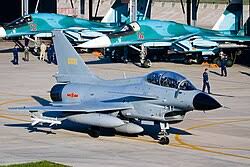
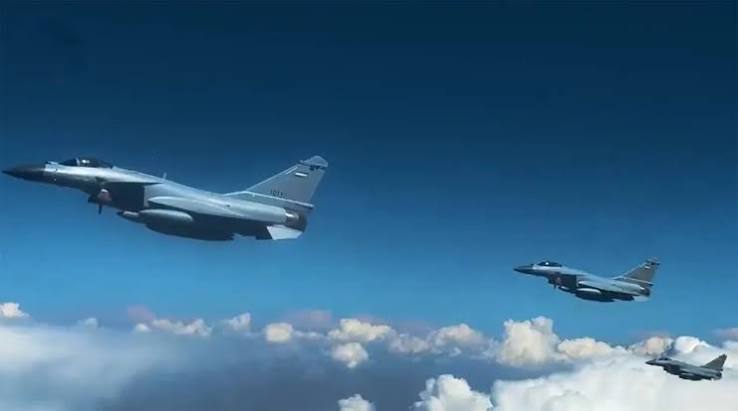
In late August, Uzbekistan revealed what aviation circles had been discussing for several months. State television showed new J-10CEs carrying national markings — the country's first modern Chinese combat aircraft and the first fighters of this origin anywhere in Central Asia.
For an air force whose backbone for decades consisted of Soviet-inherited MiG-29s, Su-27s and Su-25s, the arrival of an entirely new platform genuinely looks like the beginning of a new era. But the scale of that change remains unclear.
The published footage allows at least six J-10CEs to be counted with confidence. Reports of a much larger order — up to 24 aircraft — had circulated earlier, but neither Tashkent nor Beijing has officially confirmed a deal of that size. Uzbekistan has now become only the second confirmed foreign operator of the J-10CE after Pakistan.
A capable fighter, but not quite the aircraft it is sometimes portrayed to be
The J-10CE can hardly be described as obsolete or primitive. On the contrary, it is one of China's more serious export combat platforms. A modern AESA radar, new avionics, a helmet-mounted cueing system and long-range missile armament make it a dangerous opponent.
But a professional assessment requires separating those capabilities from the promotional aura that grew around the aircraft after the Pakistan-India crisis of 2025. Justin Bronk, a senior research fellow at the UK's Royal United Services Institute, places the J-10C in roughly the same category as the upgraded F-16C/D Block 50 in terms of size, payload and manoeuvrability. That is a highly respectable comparison, but it also helps define the aircraft's place: this is a modern lightweight single-engine fighter, not a heavy platform in the class of the Su-30, J-16 or F-15.
Heavier twin-engine aircraft have advantages that modern electronics alone cannot eliminate: more internal fuel, the ability to carry a heavier payload, longer patrol endurance and propulsion redundancy.
Bronk also draws attention to another point. In his assessment, even the export J-10CE delivered to Pakistan almost certainly does not have exactly the same radar modes as China's domestic J-10C. The precise parameters of the export radar, electronic countermeasure capabilities and software are effectively unknown outside the manufacturer and operators. That is an important caveat in the Uzbek case: there is no basis for automatically attributing to Tashkent's aircraft all the characteristics of the versions operated by the PLA Air Force.
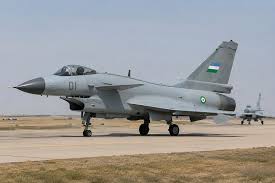
Pakistan received the J-10CE as part of a system. Uzbekistan has so far received, above all, an aircraft
It was Pakistan's experience that gave the J-10CE much of its current reputation. After the aerial confrontation with India in May 2025, the Chinese fighter and the PL-15 missile became central to debate over a changing balance of power in Asian skies. Yet the aircraft itself was only one part of what happened.
As Western analysts note, modern air combat is determined less by a comparison of two fighters' specifications than by the quality of information available to their crews. Airborne early-warning aircraft, ground-based radars, secure data links, electronic warfare assets, tactics and crew training can matter at least as much as radar performance or maximum missile range. RUSI explicitly identifies situational awareness as one of the decisive factors in modern air combat.
Pakistan built this system over many years. Its J-10CEs did not appear in a vacuum: they supplemented a large JF-17 fleet, operate alongside airborne early-warning aircraft and are integrated into an already established command-and-control and information-sharing network. Even in Pakistan's case, the degree of technical integration between the J-10CE and AEW aircraft remains disputed: Bronk notes that from the outside it is impossible to establish reliably whether this involves only voice communications, full data exchange, or the ability to receive third-party targeting data directly for missile employment.
Uzbekistan is at a much earlier stage. The FlightGlobal World Air Forces 2026 directory lists MiG-29s, Su-25s, Su-27s, transport aircraft and helicopters in the Uzbek Air Force, but no national airborne early-warning aircraft or aerial refuelling tankers. The same J-10CE can therefore represent a very different level of real combat effectiveness in Pakistani and Uzbek service.
And the Uzbek aircraft already show visible differences
The Uzbek J-10CEs shown publicly lack the fixed aerial-refuelling probe seen on Pakistani aircraft. The specialist publication The Aviationist drew attention to this detail and offered a perfectly rational explanation: Uzbekistan has no tanker aircraft and no obvious requirement for long-range expeditionary operations.
It is currently unknown how far the configuration of Uzbekistan's aircraft differs from Pakistan's in terms of radar, software, electronic warfare systems and communications. For that reason, claims that Tashkent has acquired capabilities comparable to Pakistan's remain, for now, more a matter of assumption than established fact. The gap with the Chinese version is even more obvious — above all not in the airframe itself, but in the conditions under which it is employed.
China's J-10C operates within a military system of an entirely different scale. RUSI notes that these aircraft have modern data links and satellite communications, while the fighters themselves are only one component of the rapidly modernising PLA Air Force. More than 300 J-10Cs, according to the institute, were already in Chinese service by 2025.
The missile that made the aircraft's reputation
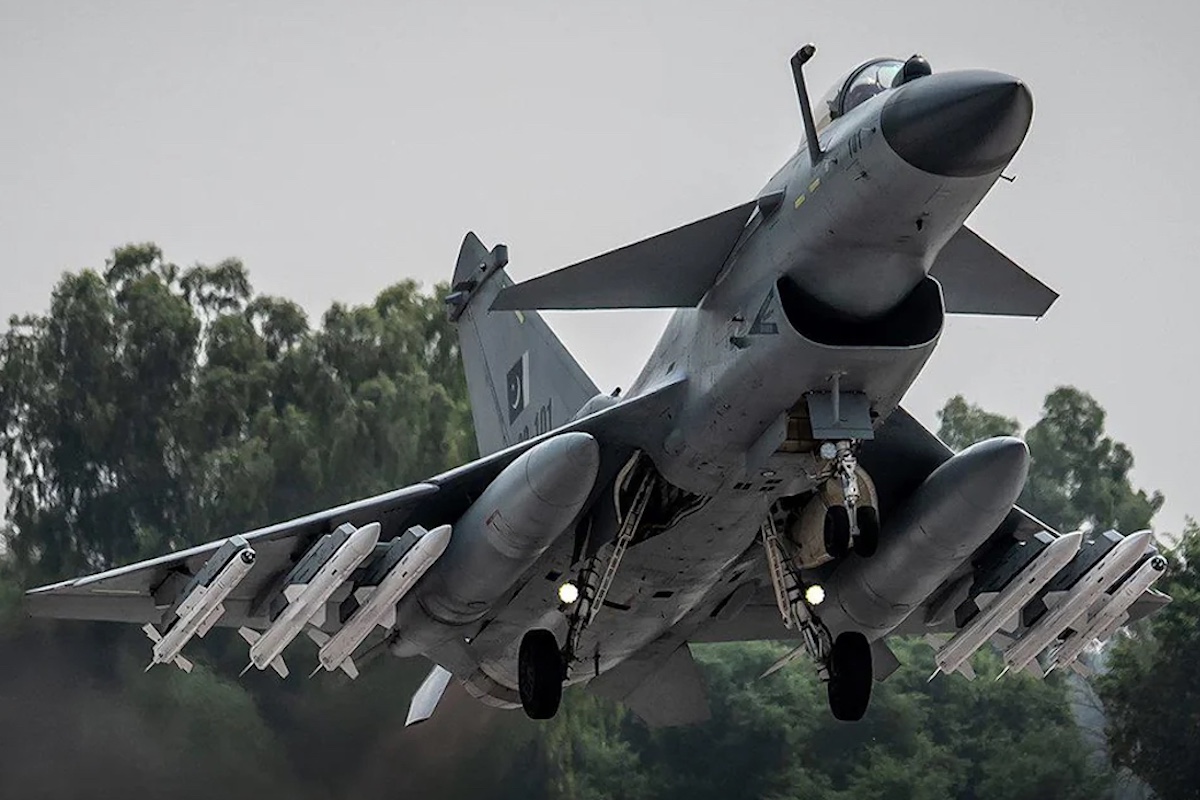
That factor is the PL-15E. The long-range Chinese missile, rather than the fighter's characteristics alone, is a major part of what makes the J-10CE attractive. Bronk sees the emergence of the PL-15 as evidence of the significant technological maturation of China's defence industry and highlights its particularly strong performance in long-range air combat. The number of missiles included in the Uzbek contract therefore matters no less than the number of aircraft.
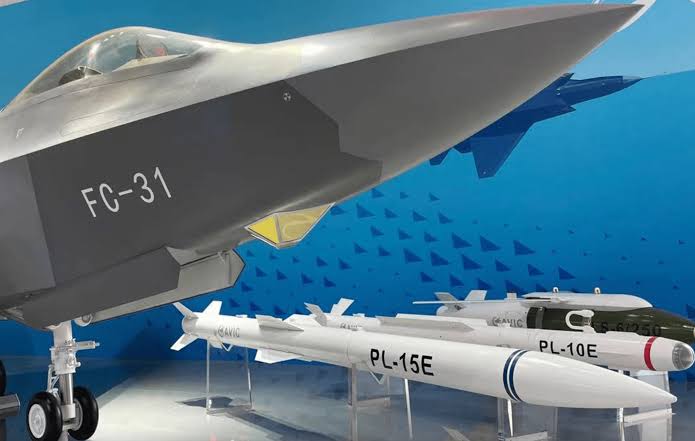
And this is where public information becomes extremely thin. The Aviationist explicitly notes that the composition of Uzbekistan's weapons package has not been disclosed. Deliveries of PL-10, PL-12 or PL-15 missiles can be assumed as possibilities, but there is still no reliable public information on the quantities involved.
Pakistan's example illustrates the scale of the issue. According to figures published by Quwa and based on leaked contract documentation, a package worth about $1.525 billion covered 20 J-10CEs, ten spare WS-10B engines and 240 PL-15E missiles. The source itself notes that the figures come from a leak, but they do provide a sense of the order of expenditure required to field a new aircraft type properly.
No comparable detail is available for the Uzbek programme. That is why the frequently repeated figure of 24 aircraft for roughly $1 billion looks unusually neat for a deal whose structure remains almost entirely unknown. If the total really is close to one billion dollars, the obvious question is what exactly that money buys. Aircraft only? Weapons? Spare engines? Ground equipment? Simulators? Training? Long-term maintenance support? There is currently no public answer to any of these questions.
Then comes the expensive part — operating the fleet
The old fleet does not disappear with the arrival of the J-10CE. According to FlightGlobal's 2026 figures, Uzbekistan had 39 MiG-29s, 21 Su-27s and 20 Su-25s on strength. Even if the actual serviceability of some of these aircraft is lower than the inventory suggests, they will remain an important part of the national air force for some time.
Decades of operating Soviet aircraft have created their own technical ecosystem: trained engineers, established maintenance procedures, spare parts, ground equipment and weapons. The Chinese aircraft requires a different technical culture. It must be maintained, supplied with spare engines and electronic modules, supported with software, provided with compatible munitions, and backed by a new generation of aircrew and engineering personnel.
This means that in the coming years Tashkent will probably have to finance its old Soviet-Russian fleet while simultaneously building the support structure required for the Chinese one. For an air force with hundreds of combat aircraft, maintaining several technological ecosystems in parallel is normal. For a comparatively small fleet, it noticeably increases the operating cost of each type.
This is where one of the ironies of the entire story appears. A purchase intended to symbolise freedom from Russian dependence may, at least initially, increase rather than reduce the number of external dependencies. The MiG-29, Su-27 and Su-25 still require Russian or Russian-compatible components. The new part of the fleet will instead be tied to a Chinese manufacturer. Tashkent is diversifying its suppliers, but diversification in itself is not the same as technological autonomy.
A single-engine design has advantages. It also has a price
Today's J-10C with the WS-10 engine differs significantly from early Chinese aircraft, and the engine itself is now used on several series-produced PLA combat aircraft. That is a strong argument against portraying the modern J-10CE as technically unreliable simply because of the long-standing historical problems of China's aircraft-engine industry. The J-10 nevertheless remains a single-engine aircraft. This is a normal and long-proven concept — the F-16 is the obvious example. At the same time, it means there is no redundant powerplant in the event of a total engine failure.
The history of the J-10 family includes accidents that serve as reminders of that risk. In November 2014, a J-10 crashed near Chengdu: the pilot ejected, but wreckage fell close to a residential area and at least seven people on the ground were reported injured. On 12 November 2016, two J-10s from a PLAAF aerobatic team collided during a training flight; the two-seat aircraft was lost, both crew members ejected, but pilot Yu Xu was killed after striking another aircraft after leaving the cockpit.
These incidents involved earlier variants and do not demonstrate any unusual accident rate for today's J-10CE. Even so, technical support remains a significant issue for a new export operator — particularly for a country that produces neither the engine nor the aircraft's principal systems and has not announced the establishment of a full domestic overhaul cycle for them. The purchase price of an aircraft is known at the moment of acquisition. The cost of keeping it serviceable fifteen years later is determined by very different factors.
The fighter may lead to further contracts
To exploit the J-10CE fully, Uzbekistan will need to integrate it with national radar assets, the air-defence system, command posts, identification systems and secure communications. Part of this infrastructure is of Soviet origin. Uzbekistan has also acquired Chinese weapons systems in recent years, so a certain technological base for further integration already exists. But the deeper the J-10CE is integrated into the national air-defence system, the stronger the incentive will become to buy compatible equipment from the same supplier.
That is not necessarily a bad thing: standardisation often brings perfectly rational advantages. However, the consequences of this logic extend far beyond the initial aircraft contract. In several years, the question may no longer be the origin of a handful of fighters, but the origin of a substantial part of the information and technical infrastructure that enables them to operate. And that is where Beijing gains an advantage regardless of whether Uzbekistan's final order turns out to be six, twelve or twenty-four aircraft.
For the first time, China is establishing a modern fighter aircraft on the Central Asian market — a market historically dominated almost entirely by the Russian aviation industry. For Moscow, this is an unwelcome precedent. For China, it is potentially the beginning of a much broader presence.
The ceremonial part of the deal is over. Now the real work begins
Uzbekistan has unquestionably strengthened its combat aviation. The J-10CE is technologically superior to much of the existing fleet and, if equipped with modern weapons, can significantly expand the air force's long-range air-combat capabilities. But China's J-10C is supported by a vast national infrastructure, a large fleet of modern aircraft and sophisticated intelligence and command-and-control assets, while Pakistan's J-10CE operates within an aviation system that Islamabad has spent years steadily rebuilding around Chinese technologies. Uzbekistan is only at the beginning of that path.
So far, Tashkent has displayed a modern fighter. Far less is known about the quantity of weapons acquired, spare engines, crew training, stocks of components, repair capacity, and the degree to which the new aircraft are integrated with the existing air-defence system. Over time, those details will define the significance of the purchase far more accurately than photographs of new aircraft on an airfield.
The central question surrounding Uzbekistan's J-10CE is therefore no longer whether the aircraft itself is good — it is modern enough to be taken seriously. The real question is whether Uzbekistan can build a system around it that allows the aircraft's potential to be used as effectively as China and Pakistan are attempting to do, and how much that system will cost over the next twenty years. For Beijing, the first part of the deal is already complete: a Chinese fighter has entered Central Asia. For Tashkent, the hardest part is probably only beginning.